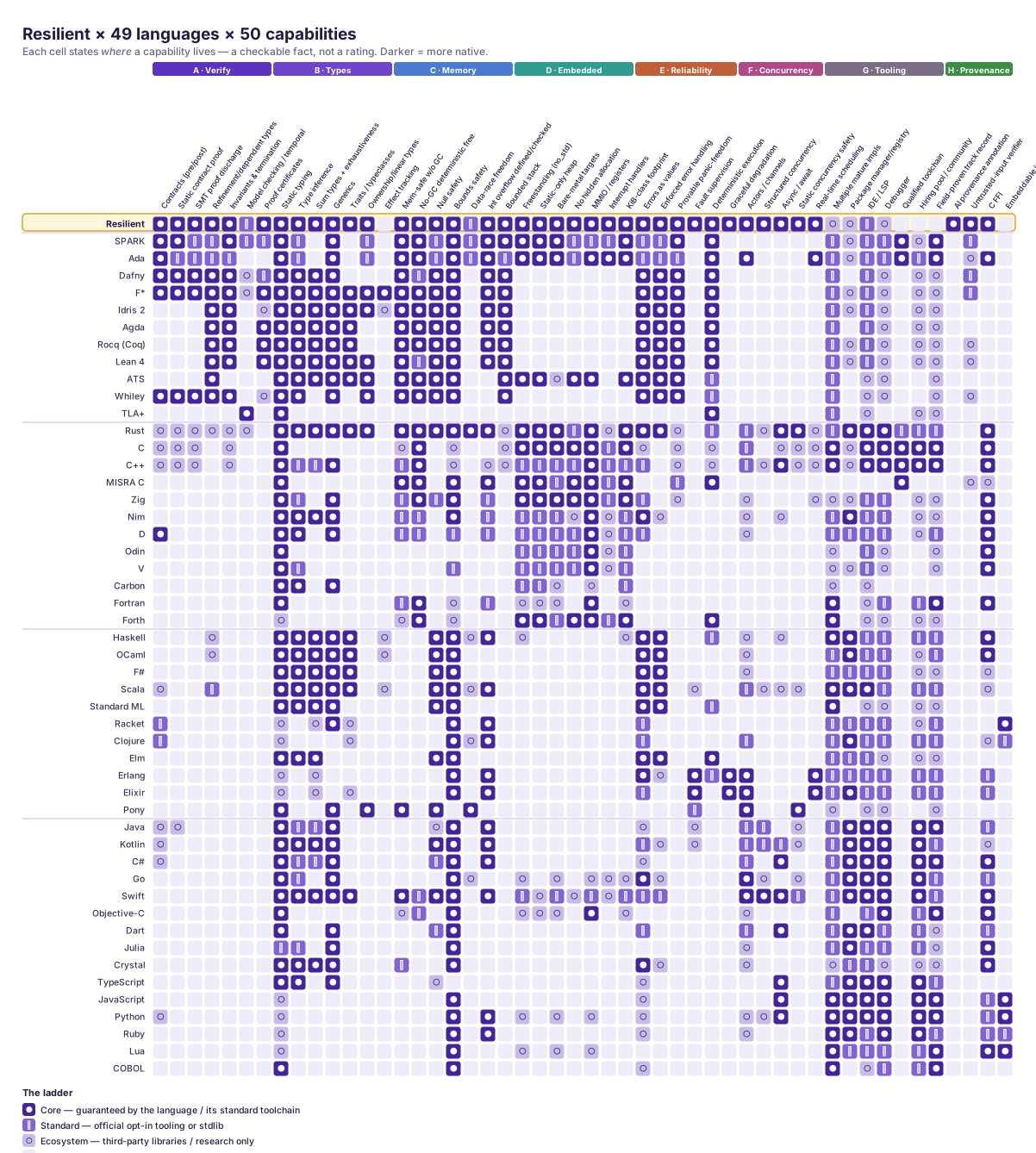
This is not a scoreboard of opinions. Every cell answers one factual, checkable question: where does this capability live for this language? — baked into the language, bolted on through official tooling, reachable only via third-party libraries, or absent. The tiers below are defined precisely enough that any cell is falsifiable: cite the rule and the language’s official documentation.
The full 50×50 grid. Resilient is the highlighted top row; capabilities are grouped into eight themes left-to-right; languages are grouped by family top-to-bottom.
The tier ladder
Tier
What it means
●
Core
Guaranteed by the language definition / type system or its single standard toolchain. A conforming program cannot opt out.
◐
Standard
Available via official / first-party tooling or standard library, but opt-in — not enforced by the core language.
○
Ecosystem
Achievable only through third-party libraries, external tools, or research prototypes; not part of the language or its official tooling.
·
None
Absent, or fundamentally incompatible with the language model.
The ladder measures provenance, not quality. “Core” does not mean good and “Ecosystem” does not mean bad — a mature third-party library can be more battle-tested than a young built-in. It means exactly what it says: how native the capability is. Two layers of backing make each cell defensible — one universal ladder, plus a per-capability rule (shown in each section) stating what earns each tier for that specific capability.
Resilient at a glance
Across all 50 capabilities, Resilient rates 39 ● Core, 3 ◐ Standard, 3 ○ Ecosystem, and 5 · None. It concentrates its Core tiers in verification, memory/embedded safety, fault handling, and AI-code provenance — and is honestly weakest on ecosystem maturity (Theme G): a single young implementation, a nascent registry, no qualified toolchain, and no field track record yet. That gap is a fact about the language’s age, not its design.
Capabilities by theme
A · Verification & Contracts
Language
Contracts (pre/post)
Static contract proof
SMT proof discharge
Refinement/dependent types
Invariants & termination
Model checking / temporal
Proof certificates
Resilient
●
●
●
●
●
◐
●
SPARK
●
●
◐
◐
●
◐
◐
Ada
●
◐
◐
◐
◐
·
·
Dafny
●
●
●
●
●
○
◐
F*
●
●
●
●
●
○
●
Idris 2
·
·
·
●
●
·
○
Agda
·
·
·
●
●
·
●
Rocq (Coq)
·
·
·
●
●
·
●
Lean 4
·
·
·
●
●
·
●
ATS
·
·
·
●
·
·
·
Whiley
●
●
●
●
●
·
○
TLA+
·
·
·
·
·
●
·
Rust
○
○
○
○
○
○
·
C
○
○
○
·
○
·
·
C++
○
○
○
·
○
·
·
MISRA C
·
·
·
·
·
·
·
Zig
·
·
·
·
·
·
·
Nim
·
·
·
·
·
·
·
D
●
·
·
·
·
·
·
Odin
·
·
·
·
·
·
·
V
·
·
·
·
·
·
·
Carbon
·
·
·
·
·
·
·
Fortran
·
·
·
·
·
·
·
Forth
·
·
·
·
·
·
·
Haskell
·
·
·
○
·
·
·
OCaml
·
·
·
○
·
·
·
F#
·
·
·
·
·
·
·
Scala
○
·
·
◐
·
·
·
Standard ML
·
·
·
·
·
·
·
Racket
◐
·
·
·
·
·
·
Clojure
◐
·
·
·
·
·
·
Elm
·
·
·
·
·
·
·
Erlang
·
·
·
·
·
·
·
Elixir
·
·
·
·
·
·
·
Pony
·
·
·
·
·
·
·
Java
○
○
·
·
·
·
·
Kotlin
○
·
·
·
·
·
·
C#
○
·
·
·
·
·
·
Go
·
·
·
·
·
·
·
Swift
·
·
·
·
·
·
·
Objective-C
·
·
·
·
·
·
·
Dart
·
·
·
·
·
·
·
Julia
·
·
·
·
·
·
·
Crystal
·
·
·
·
·
·
·
TypeScript
·
·
·
·
·
·
·
JavaScript
·
·
·
·
·
·
·
Python
○
·
·
·
·
·
·
Ruby
·
·
·
·
·
·
·
Lua
·
·
·
·
·
·
·
COBOL
·
·
·
·
·
·
·
Tier rules & notes for this theme
**Contracts (pre/post)** — Design-by-contract (pre/post)
*Rule:* Core: requires/ensures/invariant (or in/out) are language keywords. Standard: ships in the official stdlib/first-party tool as opt-in. Ecosystem: third-party library only. None: none.
*Reading:* Design-by-contract is core in Resilient, where requires/ensures/recovers_to are first-class keywords, alongside SPARK/Ada (Pre/Post aspects) and D (in/out contract blocks). Most mainstream languages have only assertions or third-party contract libraries.
**Static contract proof** — Static (compile-time) contract proof
*Rule:* Core: the standard toolchain refuses to build a program whose contracts it cannot discharge (or demands an explicit proof). Standard: an official separate verifier proves them opt-in. Ecosystem: third-party verifier. None: contracts checked only at runtime, or absent.
*Reading:* Static compile-time contract proof is core in Resilient: the bundled Z3 verifier refuses to build a program whose obligations it cannot discharge, as with Dafny, F*, Whiley and SPARK (GNATprove). In most languages contracts, if present, are only checked at runtime.
**SMT proof discharge** — SMT / automated proof discharge
*Rule:* Core: an SMT/automated solver is invoked by the standard toolchain to discharge proof obligations. Standard: an official tool integrates a solver opt-in. Ecosystem: third-party integration. None.
*Reading:* SMT/automated proof discharge is core in Resilient, whose standard toolchain invokes a bundled Z3 solver; Dafny, F* and Whiley likewise drive SMT solvers as part of their build. SPARK/Ada integrate solvers via the official but opt-in GNATprove tool.
**Refinement/dependent types** — Refinement / dependent types
*Rule:* Core: types may carry logical predicates or depend on values as part of the language. Standard: an official extension/mode. Ecosystem: library or plugin. None.
*Reading:* Refinement/dependent types are core in Resilient via #[refinement] predicate types, dependent-length arrays and ghost types, joining the dependently-typed family (Idris, Agda, Coq, Lean, F*, ATS) and refinement-typed Dafny/Whiley. In Haskell/Rust they live in libraries (LiquidHaskell etc.).
**Invariants & termination** — Loop invariants & termination checking
*Rule:* Core: the language accepts/uses loop invariants and proves or checks termination. Standard: an official tool does. Ecosystem: third-party. None.
*Reading:* Loop-invariant and termination checking is core in Resilient, which runs dedicated invariant and termination passes, as in Dafny, F*, Whiley and SPARK. Proof assistants like Coq, Lean and Agda enforce termination as a soundness requirement.
**Model checking / temporal** — Model checking / temporal specs
*Rule:* Core: temporal/state specifications are part of the language and checked by its toolchain. Standard: a first-party model checker. Ecosystem: third-party. None.
*Reading:* Model checking is standard in Resilient via first-party bridges to TLA+ and stateright plus liveness/distributed-invariant verifiers, whereas TLA+ makes temporal model checking its entire core toolchain (TLC/Apalache). Most languages have nothing here.
**Proof certificates** — Machine-checkable proof certificates
*Rule:* Core: the toolchain emits an independently re-checkable proof/certificate artifact. Standard: an official tool can export one. Ecosystem: third-party. None.
*Reading:* Machine-checkable proof certificates are core in Resilient, which emits signed, independently re-checkable SMT-LIB2 certificates; Coq, Lean, Agda and F* produce independently checkable proof terms as their core artifact.
B · Type System
Language
Static typing
Type inference
Sum types + exhaustiveness
Generics
Traits / typeclasses
Ownership/linear types
Effect tracking
Resilient
●
●
●
●
●
●
·
SPARK
●
◐
·
●
·
◐
·
Ada
●
◐
·
●
·
◐
·
Dafny
●
●
●
●
·
·
·
F*
●
●
●
●
●
●
●
Idris 2
●
●
●
●
●
●
○
Agda
●
●
●
●
●
·
·
Rocq (Coq)
●
●
●
●
●
·
·
Lean 4
●
●
●
●
●
●
·
ATS
●
●
●
●
●
●
·
Whiley
●
●
·
●
·
●
·
TLA+
●
·
·
·
·
·
·
Rust
●
●
●
●
●
●
·
C
●
·
·
·
·
·
·
C++
●
◐
◐
●
·
·
·
MISRA C
●
·
·
·
·
·
·
Zig
●
◐
·
●
·
·
·
Nim
●
●
●
●
·
·
·
D
●
●
·
●
·
·
·
Odin
●
·
·
·
·
·
·
V
●
◐
·
·
·
·
·
Carbon
●
●
·
●
·
·
·
Fortran
●
·
·
·
·
·
·
Forth
○
·
·
·
·
·
·
Haskell
●
●
●
●
●
·
○
OCaml
●
●
●
●
●
·
○
F#
●
●
●
●
●
·
·
Scala
●
●
●
●
●
·
○
Standard ML
●
●
●
●
·
·
·
Racket
○
·
○
●
○
·
·
Clojure
○
·
·
·
○
·
·
Elm
●
●
●
·
·
·
·
Erlang
○
·
○
·
·
·
·
Elixir
○
·
○
·
○
·
·
Pony
●
·
·
●
·
●
·
Java
●
◐
◐
●
·
·
·
Kotlin
●
●
●
●
·
·
·
C#
●
◐
◐
●
·
·
·
Go
●
◐
·
●
·
·
·
Swift
●
●
●
●
●
·
·
Objective-C
●
·
·
·
·
·
·
Dart
●
·
·
●
·
·
·
Julia
◐
◐
·
●
·
·
·
Crystal
●
●
●
●
·
·
·
TypeScript
●
●
·
●
·
·
·
JavaScript
○
·
·
·
·
·
·
Python
○
·
·
·
·
·
·
Ruby
○
·
·
·
·
·
·
Lua
○
·
·
·
·
·
·
COBOL
●
·
·
·
·
·
·
Tier rules & notes for this theme
**Static typing** — Static typing
*Rule:* Core: statically typed by definition. Standard: an official static checker for an otherwise dynamic language (opt-in). Ecosystem: third-party checker. None: dynamic only.
*Reading:* Static typing is core in Resilient (and most compiled languages). TypeScript is core (its own static language); Python/JS/Ruby/Lua are dynamic, with only third-party checkers (mypy, Sorbet) at the ecosystem tier.
**Type inference** — Type inference
*Rule:* Core: local (or global) type inference built into the language. Standard: official opt-in inference. Ecosystem: third-party. None.
*Reading:* Type inference is core in Resilient via built-in Hindley-Milner-style local inference, as in Haskell/OCaml/ML/Rust. C++/Java/C#/Go offer only limited local inference (auto/var/:=), placed at standard.
**Sum types + exhaustiveness** — Sum types + exhaustiveness
*Rule:* Core: tagged unions/enums with compiler-checked exhaustive matching. Standard: official library/opt-in. Ecosystem: third-party. None.
*Reading:* Sum types with compiler-checked exhaustive match are core in Resilient, Rust, Haskell, OCaml and Swift. Go has none; C#/Java (sealed + patterns) and C++ (std::variant) are standard rather than true core tagged unions.
**Generics** — Generics / parametric polymorphism
*Rule:* Core: parametric polymorphism in the language. Standard: official opt-in mechanism. Ecosystem: third-party. None.
*Reading:* Generics/parametric polymorphism are core in Resilient (monomorphized generic structs and enums) and in Rust/C++/Haskell/Java/C#/Swift and Go (since 1.18). Dynamic languages lack a type system so are none.
**Traits / typeclasses** — Traits / typeclasses (ad-hoc poly)
*Rule:* Core: typeclasses/traits/protocols for principled ad-hoc polymorphism in the language. Standard: official library. Ecosystem: third-party. None (only subtyping/overloading).
*Reading:* Traits/typeclasses are core in Resilient (impl Trait for Type, inheritance, default methods, associated constants, blanket impls, static dispatch), like Haskell typeclasses and Rust/Swift traits. Go interfaces and Java/C# interfaces are subtyping, not principled ad-hoc polymorphism (none).
**Ownership/linear types** — Ownership / linear / affine types
*Rule:* Core: linear/affine/ownership tracking enforced by the type system. Standard: official opt-in mode. Ecosystem: third-party checker. None.
*Reading:* Resilient enforces linear/uniqueness typing and region inference in the type system (though not a full Rust-style borrow checker), so it is core alongside Rust (ownership) and Pony (reference capabilities). ATS/Idris2/Lean have linear/quantitative types core.
**Effect tracking** — Effect system / effect tracking
*Rule:* Core: side effects tracked in the type system. Standard: official opt-in effect facility. Ecosystem: third-party. None.
*Reading:* Effect tracking is where Resilient is honestly weak: it has information-flow/taint tracking but not a general algebraic effect system, so it is none. F* tracks effects in its types (core); Haskell/Scala effect systems are library-based (ecosystem).
C · Memory & Safety
Language
Mem-safe w/o GC
No-GC deterministic free
Null safety
Bounds safety
Data-race freedom
Int overflow defined/checked
Bounded stack
Resilient
●
●
●
●
◐
●
●
SPARK
●
●
◐
●
◐
●
●
Ada
●
●
◐
●
◐
●
◐
Dafny
●
◐
●
●
·
●
●
F*
●
●
●
●
·
●
●
Idris 2
●
●
●
●
·
●
●
Agda
●
●
●
●
·
●
●
Rocq (Coq)
●
●
●
●
·
●
●
Lean 4
●
◐
●
●
·
●
●
ATS
●
●
●
●
·
·
●
Whiley
●
●
●
●
·
·
●
TLA+
·
·
·
·
·
·
·
Rust
●
●
●
●
●
●
○
C
○
●
·
○
·
·
○
C++
◐
●
·
○
·
○
○
MISRA C
●
●
·
●
·
●
·
Zig
◐
●
◐
●
·
◐
·
Nim
◐
◐
·
●
·
◐
·
D
◐
◐
·
◐
·
◐
·
Odin
·
·
·
·
·
·
·
V
·
·
·
◐
·
·
·
Carbon
·
·
·
·
·
·
·
Fortran
◐
●
·
○
·
◐
·
Forth
○
●
·
○
·
·
·
Haskell
·
·
●
●
○
●
·
OCaml
·
·
●
●
·
·
·
F#
·
·
●
●
·
·
·
Scala
·
·
●
●
○
●
·
Standard ML
·
·
●
●
·
·
·
Racket
·
·
·
●
·
●
·
Clojure
·
·
·
●
○
●
·
Elm
·
·
●
●
·
·
·
Erlang
·
·
·
●
·
●
·
Elixir
·
·
·
●
·
●
·
Pony
●
·
●
·
●
·
·
Java
·
·
○
●
·
●
·
Kotlin
·
·
●
●
·
●
·
C#
·
·
◐
●
·
●
·
Go
·
·
·
●
○
·
·
Swift
●
◐
●
●
·
●
·
Objective-C
○
◐
·
●
·
·
·
Dart
·
·
◐
●
·
·
·
Julia
·
·
·
●
·
·
·
Crystal
◐
·
·
●
·
·
·
TypeScript
·
·
○
·
·
·
·
JavaScript
·
·
·
●
·
·
·
Python
·
·
·
●
·
●
·
Ruby
·
·
·
●
·
●
·
Lua
·
·
·
●
·
·
·
COBOL
·
·
·
●
·
·
·
Tier rules & notes for this theme
**Mem-safe w/o GC** — Memory safety without a GC
*Rule:* Core: memory-safe in safe code WITHOUT a garbage collector, by language design. Standard: a safe subset/mode without GC. Ecosystem: safety only via external sanitizers/analyzers. None: unsafe by default, or safety depends on a GC.
*Reading:* Memory safety without a GC is core in Resilient by design (static-only heap, no null, bounds + stack budgets), alongside Rust/Ada/SPARK/Pony/Swift. C/C++ are unsafe by default (bounds only via sanitizers = ecosystem); GC languages are omitted because their safety depends on a collector.
**No-GC deterministic free** — No-GC / deterministic deallocation
*Rule:* Core: default execution model has no garbage collector; deallocation is deterministic. Standard: an official no-GC mode. Ecosystem: third-party. None: mandatory GC.
*Reading:* No-GC deterministic deallocation is core in Resilient (no collector in the default model), like Rust/C/C++/Ada/Zig. Swift uses deterministic ARC (standard); Nim/D/Crystal ship a GC by default with an official no-GC mode (standard); mandatory-GC languages are none.
**Null safety** — Compile-time null safety
*Rule:* Core: no null, or nullability tracked in the type system and checked. Standard: official nullable annotations + checker. Ecosystem: third-party analyzer. None.
*Reading:* Compile-time null safety is core in Resilient (no null; Option/never-type), like Rust, Swift optionals and the ML/functional families. C#/Dart have official opt-in nullable checkers (standard); TypeScript strictNullChecks and Java analyzers are opt-in/third-party (ecosystem).
**Bounds safety** — Bounds safety by default
*Rule:* Core: no out-of-bounds access in safe code (checked or proven) by default. Standard: default-on checks that can be disabled. Ecosystem: external tooling. None: unchecked by default.
*Reading:* Bounds safety by default is core in Resilient (checked, plus dependent-length arrays that catch OOB at compile time) and in most checked/managed languages. C/C++/Forth are unchecked by default with bounds only via sanitizers (ecosystem).
**Data-race freedom** — Data-race freedom (compile-time)
*Rule:* Core: the compiler statically prevents data races. Standard: an official opt-in checker. Ecosystem: third-party. None: races possible / caught only at runtime.
*Reading:* Compile-time data-race freedom: Resilient is standard — it has an actor model plus lock-ordering/deadlock analysis but not a whole-language guarantee (first-slice). Only Pony (reference capabilities) and Rust (Send/Sync) prevent data races language-wide (core).
**Int overflow defined/checked** — Integer overflow defined or checked
*Rule:* Core: integer overflow is defined or checked by default (trap/wrap/error is specified). Standard: default-on checks that can be disabled. Ecosystem: external. None: undefined behaviour.
*Reading:* Integer overflow is defined-or-checked (never silently undefined) as core in Resilient (saturating arithmetic + numeric checks), like Rust, Ada/SPARK (trap) and managed languages. C++ signed overflow is undefined (ecosystem).
**Bounded stack** — Bounded stack / recursion control
*Rule:* Core: stack usage is bounded/analyzable and unbounded recursion is controlled by the language. Standard: an official stack-analysis tool. Ecosystem: third-party. None.
*Reading:* Bounded stack / recursion control is core in Resilient via #[max_stack(bytes=N)] and stack budgets, alongside SPARK and the total/dependently-typed proof languages. Most mainstream languages have no built-in bound (Rust none; C/C++ only via third-party analyzers).
D · Embedded & Bare-Metal
Language
Freestanding (no_std)
Static-only heap
Bare-metal targets
No hidden allocation
MMIO / registers
Interrupt handlers
KiB-class footprint
Resilient
●
●
●
●
●
●
●
SPARK
●
●
●
◐
◐
◐
●
Ada
●
●
●
◐
●
●
●
Dafny
·
·
·
·
·
·
·
F*
·
·
·
·
·
·
·
Idris 2
·
·
·
·
·
·
·
Agda
·
·
·
·
·
·
·
Rocq (Coq)
·
·
·
·
·
·
·
Lean 4
·
·
·
·
·
·
·
ATS
●
●
○
●
●
·
●
Whiley
·
·
·
·
·
·
·
TLA+
·
·
·
·
·
·
·
Rust
●
●
●
◐
●
○
●
C
●
●
●
●
●
◐
●
C++
◐
◐
◐
◐
●
◐
◐
MISRA C
●
●
◐
●
●
◐
●
Zig
●
●
●
●
●
◐
●
Nim
◐
◐
◐
○
●
○
◐
D
◐
◐
◐
◐
●
○
◐
Odin
◐
◐
◐
◐
●
○
◐
V
◐
◐
◐
◐
●
○
◐
Carbon
◐
◐
○
·
○
·
◐
Fortran
○
○
○
·
●
·
○
Forth
●
●
◐
●
●
◐
●
Haskell
○
·
·
·
·
·
○
OCaml
·
·
·
·
·
·
·
F#
·
·
·
·
·
·
·
Scala
·
·
·
·
·
·
·
Standard ML
·
·
·
·
·
·
·
Racket
·
·
·
·
·
·
·
Clojure
·
·
·
·
·
·
·
Elm
·
·
·
·
·
·
·
Erlang
·
·
·
·
·
·
·
Elixir
·
·
·
·
·
·
·
Pony
·
·
·
·
·
·
·
Java
·
·
·
·
·
·
·
Kotlin
·
·
·
·
·
·
·
C#
·
·
·
·
·
·
·
Go
○
·
○
·
○
○
○
Swift
◐
○
◐
○
◐
○
◐
Objective-C
○
○
○
·
●
·
○
Dart
·
·
·
·
·
·
·
Julia
·
·
·
·
·
·
·
Crystal
·
·
·
·
·
·
·
TypeScript
·
·
·
·
·
·
·
JavaScript
·
·
·
·
·
·
·
Python
○
·
○
·
○
·
·
Ruby
·
·
·
·
·
·
·
Lua
○
·
○
·
○
·
·
COBOL
·
·
·
·
·
·
·
Tier rules & notes for this theme
**Freestanding (no_std)** — Freestanding / no runtime (no_std)
*Rule:* Core: runs with no OS and no language runtime by design. Standard: an official no-runtime/freestanding mode. Ecosystem: third-party port. None: requires a runtime/VM.
*Reading:* Freestanding / no-runtime (no_std) is core in Resilient, whose #![no_std] runtime needs no OS or language runtime — like C, Rust, Zig, Ada/SPARK and Forth. Managed/VM languages reach bare metal only via ports (MicroPython, TinyGo = ecosystem).
**Static-only heap** — Zero / opt-out heap (static-only)
*Rule:* Core: can run with no heap allocation, enforceable by the toolchain. Standard: an official no-alloc profile. Ecosystem: third-party discipline. None.
*Reading:* Zero / opt-out heap is core in Resilient (static-only mode, toolchain-enforced), like C, Rust no_std, Zig (explicit allocators) and Ada restriction pragmas. GC/VM languages cannot opt out of the heap (none).
**Bare-metal targets** — Bare-metal cross-compile (Cortex-M/RISC-V)
*Rule:* Core: bare-metal MCU targets are first-class in the official toolchain. Standard: official cross-compilation, community MCU support. Ecosystem: only via a third-party backend/port. None.
*Reading:* Bare-metal Cortex-M / RISC-V is core in Resilient, whose CI cross-compiles thumbv7em/thumbv6m and riscv32imac as first-class targets, like Rust and Zig. C is core via gcc/clang; TinyGo/MicroPython are ecosystem ports.
**No hidden allocation** — Deterministic, no hidden allocation
*Rule:* Core: no hidden heap/runtime allocations; costs are visible by design. Standard: an official mode/lint. Ecosystem: third-party discipline. None: pervasive hidden allocation.
*Reading:* Deterministic, no-hidden-allocation is core in Resilient (#[no_alloc] certificates), like C, Zig and Forth where costs are explicit. Rust guarantees no hidden heap in no_std but std types allocate implicitly (standard). GC/VM languages are none.
**MMIO / registers** — MMIO / register-level hardware access
*Rule:* Core: direct memory-mapped IO / volatile register access in the language. Standard: an official HAL/register abstraction. Ecosystem: third-party crates/libs. None.
*Reading:* MMIO / register access is core in Resilient (#[mmio_regmap] with overlap detection + volatile), as most systems languages expose volatile pointer access directly. Register-map abstractions are often ecosystem crates, but raw MMIO is core.
**Interrupt handlers** — First-class interrupt handlers
*Rule:* Core: ISRs are a language/attribute feature. Standard: an official mechanism/library. Ecosystem: third-party. None.
*Reading:* First-class interrupt handlers are core in Resilient (isr_call_graph analysis) and Ada (interrupt attach / protected objects). C/C++ use compiler attributes (standard); Rust's #[interrupt] and most HALs are ecosystem crates.
**KiB-class footprint** — Small footprint (KiB-class .text)
*Rule:* Core: produces KiB-class binaries with no runtime by design. Standard: achievable with official flags. Ecosystem: only with heavy third-party stripping. None: MB-class runtime required.
*Reading:* KiB-class footprint is core in Resilient (a .text ≤ 64 KiB CI budget for the Cortex-M4F demo), like C, Rust no_std, Zig, Ada and Forth. GC/VM languages need MB-class runtimes (none).
E · Reliability & Fault Handling
Language
Errors as values
Enforced error handling
Provable panic-freedom
Fault supervision
Deterministic execution
Graceful degradation
Resilient
●
●
●
●
●
●
SPARK
◐
◐
●
·
●
·
Ada
◐
◐
◐
·
●
·
Dafny
●
●
●
·
●
·
F*
●
●
●
·
●
·
Idris 2
●
●
●
·
●
·
Agda
●
●
●
·
●
·
Rocq (Coq)
●
●
●
·
●
·
Lean 4
●
●
●
·
●
·
ATS
●
●
●
·
◐
·
Whiley
●
●
●
·
◐
·
TLA+
·
·
·
·
●
·
Rust
●
●
○
·
◐
·
C
○
·
○
·
○
·
C++
◐
·
○
·
○
·
MISRA C
·
·
◐
·
●
·
Zig
◐
·
○
·
·
·
Nim
●
○
·
·
·
·
D
◐
·
·
·
·
·
Odin
·
·
·
·
·
·
V
·
·
·
·
·
·
Carbon
·
·
·
·
·
·
Fortran
·
·
·
·
·
·
Forth
·
·
·
·
●
·
Haskell
●
●
·
·
◐
·
OCaml
●
●
·
·
·
·
F#
●
●
·
·
·
·
Scala
●
●
·
○
·
·
Standard ML
●
●
·
·
◐
·
Racket
◐
·
·
·
·
·
Clojure
◐
·
·
·
·
·
Elm
●
●
·
·
●
·
Erlang
●
○
·
●
◐
●
Elixir
◐
·
·
●
·
●
Pony
·
·
·
◐
·
·
Java
○
·
·
○
·
·
Kotlin
◐
○
·
○
·
·
C#
○
·
·
·
·
·
Go
●
○
·
·
·
·
Swift
◐
◐
·
·
·
·
Objective-C
·
·
·
·
·
·
Dart
◐
·
·
·
·
·
Julia
·
·
·
·
·
·
Crystal
●
○
·
·
·
·
TypeScript
○
·
·
·
·
·
JavaScript
○
·
·
·
·
·
Python
○
·
·
·
·
·
Ruby
○
·
·
·
·
·
Lua
·
·
·
·
·
·
COBOL
○
·
·
·
·
·
Tier rules & notes for this theme
**Errors as values** — Errors as values (no default exceptions)
*Rule:* Core: the idiomatic error model is values (Result/Option/tagged), not thrown exceptions. Standard: an official result type used alongside exceptions. Ecosystem: third-party. None: exceptions-by-default.
*Reading:* Errors as values is core in Resilient (Result/Option + the ? operator), like Rust and the ML/functional family. Swift/Kotlin ship an official Result type (standard); Java/C#/Python/JS default to thrown exceptions (ecosystem-level result types).
**Enforced error handling** — Exhaustive error handling enforced
*Rule:* Core: the compiler forces handling of error/failure cases. Standard: an official opt-in lint/checker. Ecosystem: third-party linter. None.
*Reading:* Enforced exhaustive error handling is core in Resilient (exhaustive match + coverage warnings), like Rust and the exhaustive-match functional family (Elm strictest). Go can silently ignore errors, so only ecosystem errcheck exists.
**Provable panic-freedom** — Panic-free guarantee (provable)
*Rule:* Core: absence of panics/aborts/uncaught exceptions is provable or enforced by the toolchain. Standard: an official tool proves it. Ecosystem: third-party. None.
*Reading:* Provable panic-freedom is core in Resilient (#[no_panic] certification; zero-panic no_std runtime) and SPARK (proves absence of runtime errors). Rust's panic-freedom is only the ecosystem no_panic crate.
**Fault supervision** — Fault recovery / supervision
*Rule:* Core: the language/runtime supervises and recovers from faults (self-healing blocks / supervisor trees). Standard: an official supervision library. Ecosystem: third-party. None.
*Reading:* Fault recovery / supervision is core in Resilient — the flagship live { } self-healing blocks plus supervisor trees and recovers_to contracts — matched only by Erlang/Elixir OTP supervision. On the JVM, Akka is ecosystem-only.
**Deterministic execution** — Deterministic / reproducible execution
*Rule:* Core: execution is deterministic/reproducible by design (no unspecified evaluation order, no nondeterministic GC pauses in the model). Standard: an official deterministic mode. Ecosystem: third-party. None.
*Reading:* Deterministic execution is core in Resilient by design, alongside SPARK/Ada, the proof languages, TLA+ and pure Elm. C/C++ have unspecified evaluation order requiring discipline (ecosystem).
**Graceful degradation** — Redundancy / graceful degradation primitives
*Rule:* Core: built-in redundancy/fallback/last-known-good constructs. Standard: an official library. Ecosystem: third-party pattern. None.
*Reading:* Graceful-degradation primitives are core in Resilient (degraded_mode, saturation_required, backpressure_safe + live-block last-known-good restoration) and in Erlang/Elixir OTP. They are essentially absent elsewhere.
F · Concurrency
Language
Actors / channels
Structured concurrency
Async / await
Static concurrency safety
Real-time scheduling
Resilient
●
●
●
●
●
SPARK
·
·
·
·
·
Ada
●
·
·
·
●
Dafny
·
·
·
·
·
F*
·
·
·
·
·
Idris 2
·
·
·
·
·
Agda
·
·
·
·
·
Rocq (Coq)
·
·
·
·
·
Lean 4
·
·
·
·
·
ATS
·
·
·
·
·
Whiley
·
·
·
·
·
TLA+
·
·
·
·
·
Rust
◐
○
●
●
○
C
◐
·
○
○
○
C++
◐
○
●
○
○
MISRA C
·
·
·
·
·
Zig
○
·
·
·
○
Nim
○
·
○
·
·
D
○
·
·
·
·
Odin
·
·
·
·
·
V
·
·
·
·
·
Carbon
·
·
·
·
·
Fortran
·
·
·
·
·
Forth
·
·
·
·
·
Haskell
○
·
○
·
·
OCaml
○
·
·
·
·
F#
○
·
·
·
·
Scala
◐
○
○
○
·
Standard ML
·
·
·
·
·
Racket
·
·
·
·
·
Clojure
◐
·
·
·
·
Elm
·
·
·
·
·
Erlang
●
·
·
·
●
Elixir
●
·
·
·
●
Pony
●
·
·
●
·
Java
◐
◐
·
○
·
Kotlin
◐
◐
◐
○
·
C#
◐
·
●
·
·
Go
●
○
·
○
·
Swift
●
●
●
◐
·
Objective-C
○
·
·
·
·
Dart
◐
·
●
·
·
Julia
○
·
·
·
·
Crystal
○
·
·
·
·
TypeScript
·
·
●
·
·
JavaScript
·
·
●
·
·
Python
○
○
●
·
·
Ruby
○
·
·
·
·
Lua
·
·
·
·
·
COBOL
·
·
·
·
·
Tier rules & notes for this theme
**Actors / channels** — Message-passing / actor model
*Rule:* Core: actors or channels are a language primitive. Standard: an official concurrency library. Ecosystem: third-party. None.
*Reading:* Message-passing / actors are core in Resilient (actors + mailboxes + drain + an actor verifier), like Erlang/Elixir/Pony/Go and Swift/Ada. Rust/C/C++ expose channels/threads via stdlib (standard).
**Structured concurrency** — Structured concurrency
*Rule:* Core: structured concurrency (scoped task lifetimes) in the language. Standard: an official library. Ecosystem: third-party. None.
*Reading:* Structured concurrency is core in Resilient via bounded-blocking and backpressure-safe constructs (first-slice), alongside Swift task groups. Kotlin coroutines and Java's preview are official libraries (standard); Go/Rust/Python rely on third-party (errgroup, trio).
**Async / await** — Async / await
*Rule:* Core: async/await syntax in the language. Standard: an official async library/runtime. Ecosystem: third-party. None.
*Reading:* Async/await syntax is core in Resilient (state-machine transform + scheduler hook), like Rust/C#/JS/TS/Python/Swift/Dart and C++20 coroutines. Kotlin's lives in the official coroutines library (standard).
**Static concurrency safety** — Compile-time deadlock / race prevention
*Rule:* Core: the compiler statically prevents deadlocks or data races in concurrent code. Standard: an official opt-in checker. Ecosystem: third-party. None.
*Reading:* Compile-time deadlock/race prevention is core in Resilient (lock-order graph with cycles as hard errors, priority-inversion detection), like Rust (Send/Sync) and Pony. Swift actor isolation/Sendable is an opt-in standard checker.
**Real-time scheduling** — Real-time scheduling support
*Rule:* Core: real-time constructs/priorities/deadlines in the language or its standard runtime. Standard: an official real-time profile. Ecosystem: third-party RTOS bindings. None.
*Reading:* Real-time scheduling support is core in Resilient (#[wcet(cycles=N)] contracts, watchdog-feed, power budgets) and Ada (Ravenscar). Erlang/Elixir provide soft-real-time scheduling; Rust/C/C++ rely on third-party RTOS bindings (ecosystem).
G · Tooling & Ecosystem Maturity
Language
Multiple mature impls
Package manager/registry
IDE / LSP
Debugger
Qualified toolchain
Hiring pool / community
Field-proven track record
Resilient
○
○
◐
○
·
·
·
SPARK
◐
○
◐
◐
●
○
●
Ada
◐
○
◐
◐
●
◐
●
Dafny
◐
·
◐
○
·
○
○
F*
◐
○
◐
○
·
○
○
Idris 2
◐
○
◐
○
·
○
○
Agda
◐
·
◐
○
·
○
○
Rocq (Coq)
◐
○
◐
○
·
○
○
Lean 4
◐
○
◐
○
·
○
○
ATS
◐
·
○
○
·
·
○
Whiley
◐
·
○
○
·
·
○
TLA+
◐
·
○
·
·
○
○
Rust
◐
●
●
●
◐
◐
◐
C
●
○
●
●
●
●
●
C++
●
○
●
●
●
●
●
MISRA C
·
·
·
·
●
·
·
Zig
○
○
◐
◐
·
○
○
Nim
◐
●
◐
◐
·
○
○
D
◐
◐
◐
◐
·
○
◐
Odin
○
·
◐
○
·
·
○
V
○
○
◐
○
·
·
○
Carbon
○
·
○
·
·
·
·
Fortran
●
·
○
◐
·
◐
●
Forth
●
·
○
○
·
○
○
Haskell
●
●
◐
◐
·
◐
◐
OCaml
◐
●
◐
◐
·
○
◐
F#
◐
◐
◐
◐
·
○
○
Scala
●
●
●
◐
·
◐
◐
Standard ML
●
·
○
○
·
○
○
Racket
◐
◐
◐
◐
·
○
◐
Clojure
◐
●
◐
◐
·
◐
◐
Elm
◐
◐
◐
○
·
○
○
Erlang
◐
◐
◐
◐
·
◐
◐
Elixir
◐
●
◐
◐
·
◐
◐
Pony
○
·
○
○
·
·
○
Java
◐
●
●
●
·
●
●
Kotlin
◐
●
●
●
·
●
◐
C#
◐
●
●
●
·
●
●
Go
◐
●
●
●
·
●
◐
Swift
◐
●
●
●
·
●
◐
Objective-C
◐
·
◐
●
·
◐
●
Dart
◐
●
●
◐
·
◐
○
Julia
◐
●
◐
◐
·
◐
○
Crystal
○
◐
◐
○
·
○
○
TypeScript
◐
●
●
●
·
●
◐
JavaScript
●
●
●
●
·
●
●
Python
●
●
●
●
·
●
●
Ruby
●
●
◐
●
·
●
◐
Lua
●
◐
◐
◐
·
◐
●
COBOL
●
·
○
◐
·
◐
●
Tier rules & notes for this theme
**Multiple mature impls** — Multiple mature compilers / implementations
*Rule:* Core: two or more independent, production-grade implementations. Standard: one mature reference implementation. Ecosystem: a single young or experimental implementation. None.
*Reading:* Multiple mature implementations: Resilient is ecosystem — a single young reference compiler, no second independent impl. C/C++/JS/Python/Ruby/Fortran have several mature compilers (core); Rust/Go/Java have one industrial impl (standard).
**Package manager/registry** — Package manager + registry
*Rule:* Core: an official package manager AND a widely-used registry. Standard: an official manager with a community registry. Ecosystem: third-party managers only. None.
*Reading:* Package manager + registry: Resilient is ecosystem — it has an official manager (rz.toml, semver, publish) but no established public registry yet. cargo/npm/pip/maven back core; C/C++/Ada lack a single official manager+registry.
**IDE / LSP** — IDE / LSP support
*Rule:* Core: official LSP server plus first-party IDE integration. Standard: an official or de-facto LSP server. Ecosystem: community-only tooling. None.
*Reading:* IDE / LSP: Resilient is standard — it ships an official LSP server, but first-party IDE integration is still early. Mainstream languages pair official LSP with deep first-party IDE support (core).
**Debugger** — Debugger / step-through tooling
*Rule:* Core: a first-class, widely-used debugger with source stepping. Standard: an official/de-facto debugger. Ecosystem: partial or third-party. None.
*Reading:* Debugger / step-through: Resilient is ecosystem — a debugger module + DAP server exist, but source stepping is still emerging. gdb/lldb-class debuggers put the mainstream languages at core.
**Qualified toolchain** — Certified / qualified toolchain
*Rule:* Core: a qualified compiler/toolchain for DO-178C / ISO 26262 / IEC 61508 is commercially available. Standard: a qualification kit or documented process exists. Ecosystem: qualification in progress or third-party evidence. None.
*Reading:* Certified/qualified toolchain: Resilient is none — it explicitly does not claim DO-178C / ISO 26262 / IEC 61508 conformance and qualification has not started. Ada/SPARK (GNAT Pro), qualified C/C++ and MISRA C toolchains are core; Rust's Ferrocene is standard.
**Hiring pool / community** — Large hiring pool / community
*Rule:* Core: a large global talent pool. Standard: a sizable niche community. Ecosystem: a small but real community. None: negligible.
*Reading:* Hiring pool / community: Resilient is none — a tiny pre-production community. Mainstream languages have large global pools (core); Rust/Scala/Clojure/Julia are sizable niches (standard).
**Field-proven track record** — Production track record (field-proven)
*Rule:* Core: decades of safety-critical field deployment. Standard: years of production use. Ecosystem: early adopters / niche production. None: pre-production.
*Reading:* Production track record: Resilient is none — pre-production, no safety-critical field deployments. C/C++/Ada/SPARK/COBOL/Fortran have decades in the field (core); Rust/Go/Swift have years of production use (standard).
H · Provenance & Interop
Language
AI provenance annotation
Untrusted-input verifier
C FFI
Embeddable in host apps
Resilient
●
●
●
·
SPARK
·
◐
·
·
Ada
·
○
●
·
Dafny
·
◐
·
·
F*
·
◐
·
·
Idris 2
·
·
·
·
Agda
·
·
·
·
Rocq (Coq)
·
○
·
·
Lean 4
·
○
·
·
ATS
·
·
·
·
Whiley
·
○
·
·
TLA+
·
·
·
·
Rust
·
·
●
·
C
·
·
●
·
C++
·
·
●
·
MISRA C
·
○
○
·
Zig
·
·
●
·
Nim
·
·
●
·
D
·
·
●
·
Odin
·
·
●
·
V
·
·
●
·
Carbon
·
·
·
·
Fortran
·
·
●
·
Forth
·
·
·
·
Haskell
·
·
●
·
OCaml
·
·
●
·
F#
·
·
○
·
Scala
·
·
○
·
Standard ML
·
·
·
·
Racket
·
·
·
●
Clojure
·
·
○
◐
Elm
·
·
·
·
Erlang
·
·
◐
·
Elixir
·
·
◐
·
Pony
·
·
·
·
Java
·
·
◐
·
Kotlin
·
·
○
·
C#
·
·
●
·
Go
·
·
◐
·
Swift
·
·
●
·
Objective-C
·
·
●
·
Dart
·
·
◐
·
Julia
·
·
●
·
Crystal
·
·
●
·
TypeScript
·
·
·
·
JavaScript
·
·
◐
●
Python
·
·
◐
●
Ruby
·
·
◐
◐
Lua
·
·
●
●
COBOL
·
·
·
·
Tier rules & notes for this theme
**AI provenance annotation** — AI-generated-code provenance / attestation
*Rule:* Core: the language records/attests the provenance of generated code as a first-class construct. Standard: an official tool tracks it. Ecosystem: third-party. None.
*Reading:* AI-generated-code provenance is essentially unique to Resilient: #[generated(intent, prompt_hash)] records provenance as a first-class language construct. No other mainstream language has a language-level attestation construct for generated code (editor plugins and commit conventions do not count).
**Untrusted-input verifier** — Untrusted-by-default verification of generated code
*Rule:* Core: the toolchain re-derives every safety claim from the typed AST and treats generated/asserted code as untrusted input. Standard: an official tool does. Ecosystem: third-party. None.
*Reading:* Untrusted-by-default verification of generated code is core in Resilient: the compiler + Z3 + TLA+ re-derive every safety claim from the typed AST, treating AI output as untrusted input. SPARK/Dafny/F* re-derive safety from source for any code, including generated (standard).
**C FFI** — C FFI / interop
*Rule:* Core: a built-in C foreign-function interface. Standard: an official FFI library. Ecosystem: third-party binding generators. None.
*Reading:* C FFI is core in Resilient (extern fn, trampolines, variadic bindings), as in most systems languages plus Fortran (ISO_C_BINDING), Ada, Julia (ccall) and Lua (C API). Go (cgo), Python (ctypes), Java (JNI/Panama) are official but opt-in (standard).
**Embeddable in host apps** — Embeddable in / interoperable with host apps
*Rule:* Core: designed to embed inside a host application (as a scripting/extension layer). Standard: an official embedding API. Ecosystem: third-party embedding. None.
*Reading:* Embeddability as a host scripting layer is where Resilient is none: it is a compiled systems language with a REPL/JIT but not designed to embed as a guest. Lua is the canonical embeddable language; JS engines, CPython and Racket ship embedding APIs (core).
Every language, tallied
Language
Family
● Core
◐ Standard
○ Ecosystem
· None
Resilient
resilient
39
3
3
5
SPARK
proof
18
17
2
13
Ada
proof
19
17
2
12
Dafny
proof
18
5
4
23
F*
proof
23
3
5
19
Idris 2
proof
18
2
6
24
Agda
proof
18
2
3
27
Rocq (Coq)
proof
18
2
5
25
Lean 4
proof
18
3
5
24
ATS
proof
20
2
4
24
Whiley
proof
17
2
5
26
TLA+
proof
3
1
3
43
Rust
systems
25
7
11
7
C
systems
15
2
14
19
C++
systems
12
11
13
14
MISRA C
systems
12
3
2
33
Zig
systems
11
8
7
24
Nim
systems
9
10
7
24
D
systems
6
15
3
26
Odin
systems
3
6
4
37
V
systems
3
8
5
34
Carbon
systems
3
3
4
40
Fortran
systems
6
4
6
34
Forth
systems
8
2
7
33
Haskell
functional
13
5
7
25
OCaml
functional
11
4
4
31
F#
functional
9
4
4
33
Scala
functional
13
5
8
24
Standard ML
functional
9
1
4
36
Racket
functional
4
7
4
35
Clojure
functional
3
9
4
34
Elm
functional
8
3
3
36
Erlang
functional
7
8
3
32
Elixir
functional
7
7
3
33
Pony
functional
8
1
4
37
Java
mainstream
9
6
6
29
Kotlin
mainstream
11
6
5
28
C#
mainstream
11
5
2
32
Go
mainstream
9
4
9
28
Swift
mainstream
17
10
3
20
Objective-C
mainstream
6
4
6
34
Dart
mainstream
6
7
1
36
Julia
mainstream
4
6
2
38
Crystal
mainstream
7
3
6
34
TypeScript
mainstream
8
2
2
38
JavaScript
mainstream
9
1
2
38
Python
mainstream
10
1
8
31
Ruby
mainstream
6
4
3
37
Lua
mainstream
5
4
4
37
COBOL
mainstream
4
2
2
42
How to dispute a cell
Found one you disagree with? Good — that is the point of defining the tiers. Open an issue citing (1) the capability’s rule, (2) the language’s official documentation, and (3) which tier you believe applies. Because every rating is a claim about provenance rather than taste, disagreements resolve against evidence, not vibes.